Understanding Dry-Out Procedures: Why Proper Curing Matters
Skipping or rushing the dry-out schedule is the #1 cause of early refractory failure. Here's what a proper dry-out looks like and why it cannot be shortcut.
A newly installed refractory lining contains a significant amount of water — both chemically bound and physically held in the pores. If this water is not driven out in a controlled way, it turns to steam on first firing, builds pressure inside the lining, and causes spalling, cracking, or in severe cases, explosive failure.
Dry-out is not an optional step. It is a mandatory procedure that determines whether your new lining lasts one year or five.
What Happens Inside a Curing Lining
Fresh castable contains around 8–12% water by weight. As temperature rises, free water evaporates first (up to 100°C), then adsorbed water (100–300°C), and finally chemically combined water from the cement hydrates (300–600°C).
Each of these stages needs time. Rush through it, and steam pressure inside the pores exceeds the tensile strength of the castable. The result is internal fractures you cannot see — until the lining fails prematurely six months later.
A Typical Dry-Out Schedule
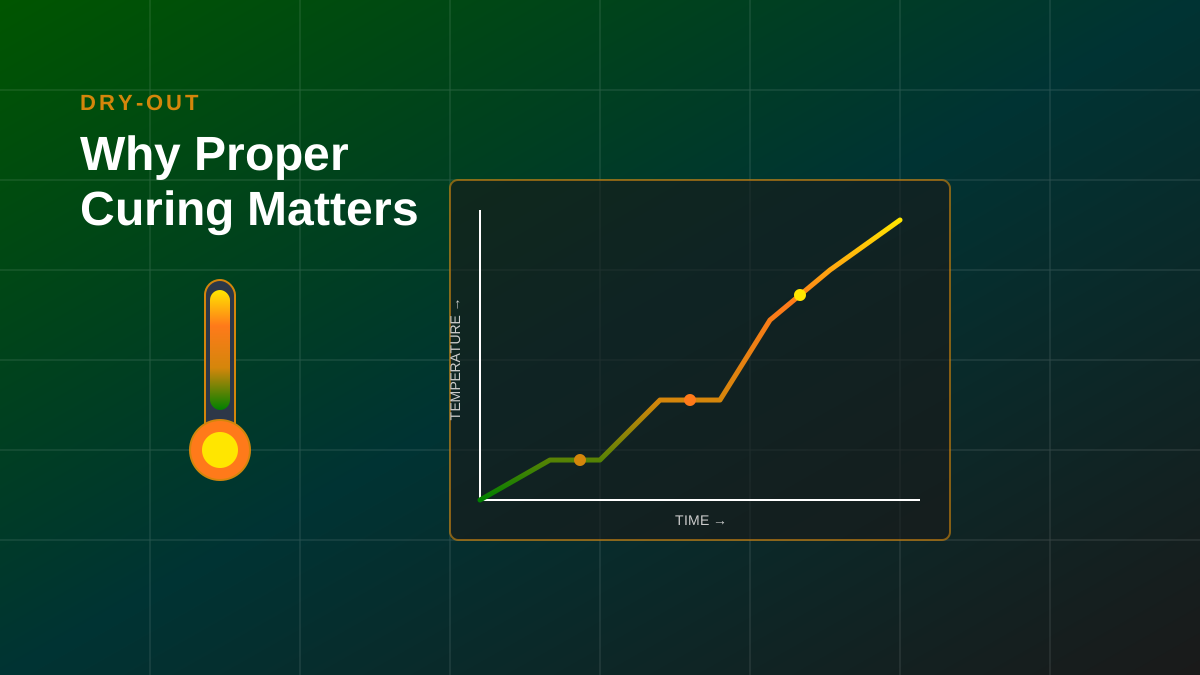
For a 250 mm thick dense castable lining, a standard dry-out schedule looks like this: ramp at 25°C/hour up to 150°C and hold for 12–24 hours, ramp at 25°C/hour to 300°C and hold for 12–24 hours, ramp at 50°C/hour to 600°C and hold for 6–12 hours, then ramp at 50–100°C/hour to operating temperature.
Total duration ranges from 48 to 96 hours depending on lining thickness and mass. Thicker linings need longer holds.
Equipment We Use
M.S. Enterprises uses diesel-fired or LPG-fired dry-out burners with precise temperature control. For large boilers and kilns, we deploy multiple burners with automated fuel metering to maintain a uniform temperature profile.
Every dry-out is logged in real time with thermocouples at multiple lining locations. The final report includes a temperature-vs-time chart that is part of the handover documentation.
What Happens if You Skip It
We have been called for emergency repairs on linings that were put into service without proper dry-out. The pattern is consistent: visible spalling within the first few weeks, hot spots within 2–3 months, and complete relining required within 6–9 months.
The cost of a proper dry-out — typically 2–4% of the refractory installation cost — is insignificant compared to a second relining within a year.
Key Takeaway
If your refractory specification does not include a dry-out procedure, it is incomplete. Always ask your contractor for a written dry-out schedule, and insist on a signed dry-out report before commissioning.